
Book an Appointment

Fill out this simple form and we’ll call you right back.

  • 900 Glades Road, Suite 3A Boca Raton, FL 33431
  • Mon – Fri: 9:00 am – 5:00 pm, Sat – Sun: Closed
  • (561) 368-3636

What Is a Root Canal and Why Are They Needed?

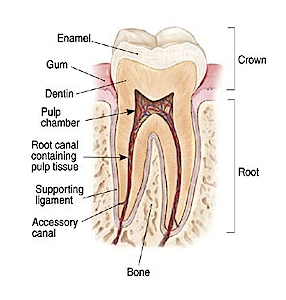
A root canal is a dental procedure that is done to treat damage or infection inside a tooth. Specialized dentists called endodontists do the most complex and efficient root canals. Endodontics is the branch of dentistry that focuses on diagnosing, treating and saving teeth whose internal anatomy of nerves, blood vessels, connective tissues or roots have been affected by injury, decay or infection. These specialists complete about three extra years of dental training in order to do these delicate root canal treatment procedures.

Reasons for Root Canal Treatment

Patients usually learn about this different branch of dentistry when a general dentist refers them to the endodontist for root canal treatment. Some of the reasons that make it necessary to see the specialist include:

  •   Tooth decay that is beyond the outer layer called enamel and the inner layer called dentin.
  •   Treatment for complex and multi-rooted teeth such as the molars.
  •   When specialized equipment such as small files, digital imaging systems, microscopes and magnifying devices are required for treatment.
  •   To perform re-treatments of unsuccessful root canal procedures.
  •   To diagnose dental pain whose source is not readily identifiable.
  •   To conduct emergency root canal treatments.

When you are ready for treatment, the endodontist will isolate the tooth using a dental dam; apply anesthesia to the area; access the pulp chamber by drilling a hole through the enamel; treat the area by removing the infected pulp; disinfect the area; then fill and seal the tooth.

What happens if the tooth is not permanently restored?

Permanent restoration of teeth means applying permanent fillings or fitting a permanent crown on the tooth involved in a root canal procedure. Failure to do so puts the tooth at risk of damage and infection. The permanent crown serves several functions:

  •   It protects the treated tooth from getting fractured.
  •   It alleviates any extra stress the tooth might incur when chewing food.
  •   It can restore the natural look of your teeth.
  •   It can replace extensively damaged and excavated teeth.
  •   It seals the tooth after a root canal procedure.
  •   It ensures the longevity of the tooth.

Once the whole process is completed, you will need to exercise proper dental hygiene through flossing, brushing, and visiting the dentist occasionally for cleaning. It is normal for your teeth to feel a bit sensitive after the root canal. If that’s the case, you can use toothpastes designed for sensitive teeth. Any pain or discomfort should subside within the first week. However, if pain persists or you have any questions, you should consult your dentist immediately.

The Cost of Root Canal Treatment

The cost of having a root canal treatment depends on several factors. First, the fee will vary if the treatment is done by either a general dentist or an endodontist. You will also find that it is more expensive to treat pre-molars and molars than it is to treat frontal teeth. The prices don’t vary by much though. This variation is caused by the difficulty in accessing the root canals in the back teeth and in the complex nature of their root canals. Lastly, re-treatment fees for root canal therapy tend to be higher than the initial cost of treatment. This is because re-treatments require specialized skill and time to undo the damage caused by an unsuccessful root canal. Going to a certified endodontist in Boca Raton, like Dr. Mitchell, for the initial treatment is therefore more cost-effective and guarantees a higher chance of success. It is also important to note that there is a final cost you will incur after the root canal treatment since a general dentist has to permanently restore the treated tooth.


Frequently Asked Questions

It is a branch of dentistry that specializes in the cause, prevention and treatment of diseases of the human dental pulp and the surrounding bone and tissue.

A specialist in the treatment of diseases and injuries to the root and surrounding bone and tissues. An endodontist is a dentist who receives 2-3 years of specialty training after dental school, and often after a hospital based residency in general dentistry in an accredited dental school.

To become Board Certified, an endodontist must meet the following requirements: Complete a postdoctoral study in an ADA approved program and be identified with endodontics for at least four years. Demonstrate high moral, ethical and professional qualifications and hold a valid license to practice endodontics. Pass an extensive written exam that tests a broad range of fields including anatomy, biochemistry, pathology, immunology, microbiology, radiology, pharmacology, statistics, clinical endodontics, and related medical disciplines. Submit documentation of a variety of cases from his/her own practice. These cases must be diverse and complex enough to demonstrate exceptional knowledge, skill and expertise in the full scope of the field of endodontics. Complete an oral exam given by a team of experts in the field. Throughout this intensive interview, a high level of problem solving, decision-making, analysis, creativity, diagnosis and treatment must be demonstrated.

Founded in 1964, the American Board of Endodontics is the only certifying board in the dental specialty of Endodontics recognized by the American Dental Association and the American Association of Endodontists. The purpose of the ABE is to assure the public that the endodontists it certifies have demonstrated exceptional knowledge, skill and expertise in the specialty of endodontics and to progressively raise the quality of patient care.

All dentists receive training in endodontic treatment in dental school. However, because of specialized equipment and advanced education and training in root canal techniques and procedures, many dentists refer patients needing endodontic treatment to an endodontic specialist.

The length of time to do each procedure varies. Each tooth is different with unique anatomy and conditions. The number of roots involved, the condition of the roots, infection, accessibility, all determine the time needed. Many treatments are completed in one visit, but some cases will require additional visits. Visits can take from approximately 1 hour to over 2 hours.

It is not uncommon to experience moderate discomfort and sensitivity, and tenderness to touch and chewing after your initial visit. The discomfort will gradually decrease over the following 5 to 7 days. The first choice for pain relief is Ibuprofen. If you cannot take Ibuprofen, we recommend Acetaminophen. You should ask your physician prior to taking any of these medications.

You should schedule an appointment to see your dentist within 30 days of your root canal treatment. It is important to protect the remaining tooth structure with a permanent restoration. A crown is usually recommended after root canal treatment.

After root canal treatment, your tooth will have a temporary filling inserted. After time, food debris and bacteria will contaminate the root canal system. This will result in treatment failure and often another root canal will need to be done – at additional expense and time. If the damage is too severe, extraction becomes the only choice. Your tooth can also fracture if not permanently restored in a timely manner. This too may result in extraction.